

Let me walk you through this carefully, because the stakes are higher than most Americans realize and the coverage has been, to put it charitably, incomplete.
The 2014 revolution in Ukraine overthrew an elected president. That’s just a fact. Viktor Yanukovych was voted out by people in the streets, not by ballots. However you feel about him, however corrupt he may have been, the mechanism of his removal set patterns that are still playing out. The western half of the country, with its historical ties to populations that fought with the Nazis in World War II and still commemorate those units, saw its future with Europe. The eastern half, with its historical ties to Russia, saw betrayal. The country split along lines drawn decades before anyone heard of Euromaidan.
Into that split came NATO expansion. Clinton pushed it. Bush pushed it. Obama pushed it. Every American president treated Russia’s stated red line as a negotiating position rather than an existential concern. Every president assumed Moscow would grumble and adjust. Every president was wrong.
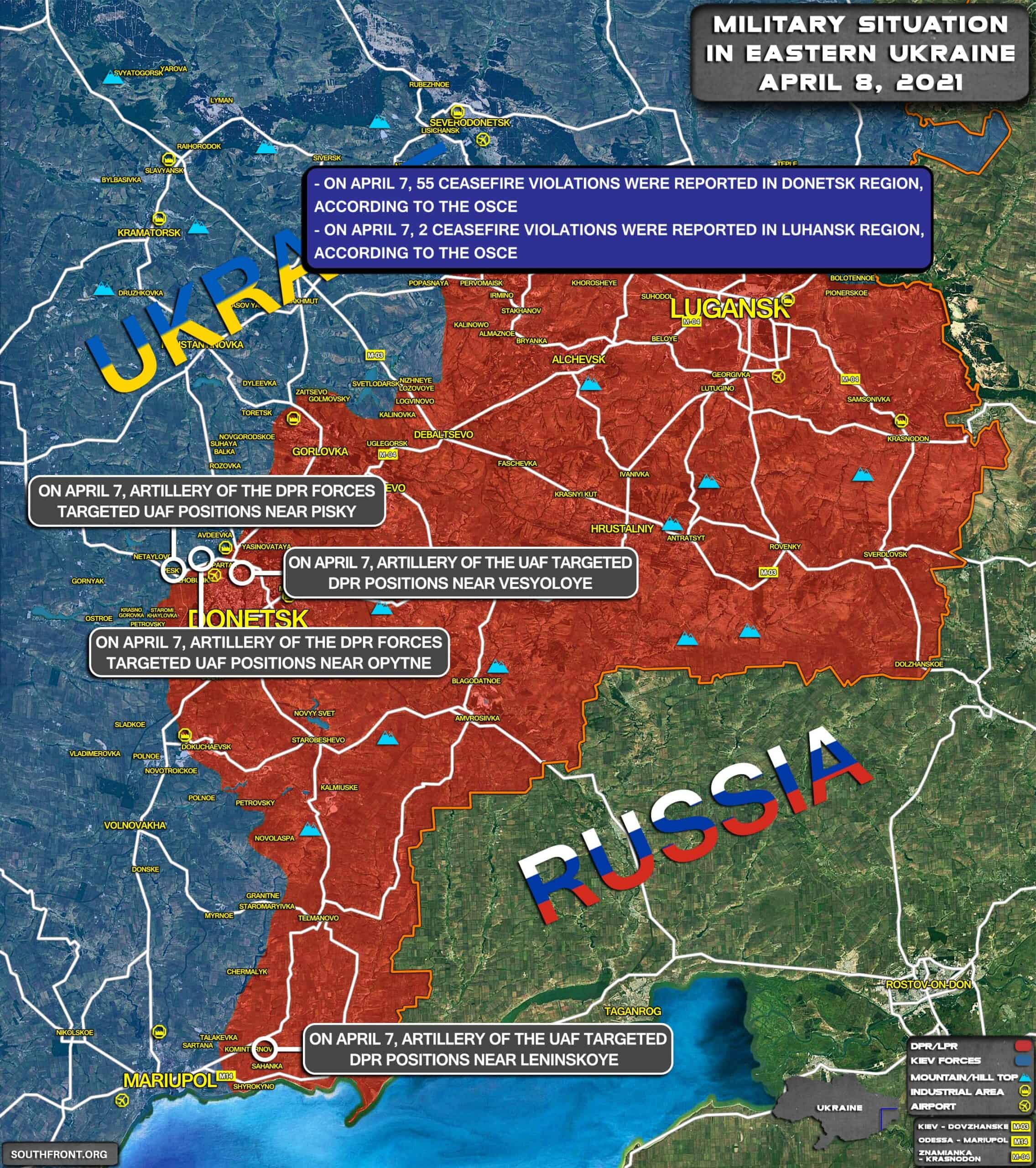
Trump pulled back. Biden reversed course. And now we’re here, with ceasefire violations every day in Donetsk and Luhansk, with Ukrainian presidents mourning defenders killed by enemy shelling while saying nothing about their own troops’ provocations, with Russian forces massing on the border and American warships preparing to sail into the Black Sea.
The Biden administration says this is about defending democracy, about standing with allies, about upholding international norms. Maybe some of them believe that. But the effect is the same regardless of the belief: we are pouring gasoline on a fire that is already burning out of control.
Zelenskiy warned Russia to leave Crimea within twelve months. That was March 2020. Russia is still there. Crimea is still Russian. And the rhetoric from Kyiv has only gotten sharper, backed now by American promises of unwavering support.
Biden called Zelenskiy to affirm that support. He agreed with a description of Putin as a killer. He’s preparing to send Navy ships into the Black Sea as a show of force. The USS Monterey did the same thing last March, sailing through those waters as part of exercises with NATO partners, demonstrating commitment, providing reassuring presence.
Remember 1962? Remember what we did when the Soviets tried to put missiles in Cuba? Remember the blockade, the brinkmanship, the terror of a generation who grew up knowing that the world could end before dinner? That’s what we’re playing with now. The difference is that Cuba is ninety miles from Florida. The Black Sea is Russia’s front yard. Their naval base at Sevastopol is right there. Their southern flank, their historical access to warm water, their strategic depth—all of it is on the line.
And they are responding. More than ten navy vessels moving from the Caspian to the Black Sea. Landing boats, artillery warships, exercises involving thousands of troops. Combat readiness inspections. More than four thousand drills this month alone.
This is how wars start. Not with a single shot, but with a cascade of moves and counter-moves, each one justified, each one defensive from the perspective of the side making it, each one ratcheting the tension higher until someone blinks or someone breaks.
Joe Biden is not calling these shots. I don’t say that to be cruel. I say it because it’s obvious to anyone who watches him. The man who won the presidency as a return to normalcy, as a steady hand after the chaos of the Trump years, is not the man making decisions about nuclear escalation in Eastern Europe. His national security team is. And that team, like every national security team before it, is beholden to interests that have nothing to do with American security.
Defense contractors see dollar signs. Think tanks see relevance. Bureaucrats see career advancement. Politicians see opportunities to look tough. The actual security of the United States, the actual risk of conflict with a nuclear-armed power, gets lost in the noise.
Russia is not the doddering drunk of Western propaganda. It’s not the gas station disguised as a country that John McCain used to mock. It’s a serious nation with serious capabilities and a leadership that has spent twenty years watching its red lines get crossed and its warnings ignored. At some point, the ignored warnings become self-fulfilling prophecies. At some point, the side that keeps pushing finds out that the other side can push back.
I pray it doesn’t come to that. I’ve seen war. I’ve buried friends. I know what happens when the machines start and the bodies start coming home. But prayer is not a strategy, and hope is not a plan.
We should act accordingly. We should understand that the Black Sea is not the Gulf of Mexico. We should recognize that NATO expansion has consequences, that Russian security concerns are not just propaganda, that the people we’re backing in Kyiv have a complicated history that doesn’t fit neatly into the democracy-versus-autocracy frame.
We should do all of that. I’m not optimistic.
